
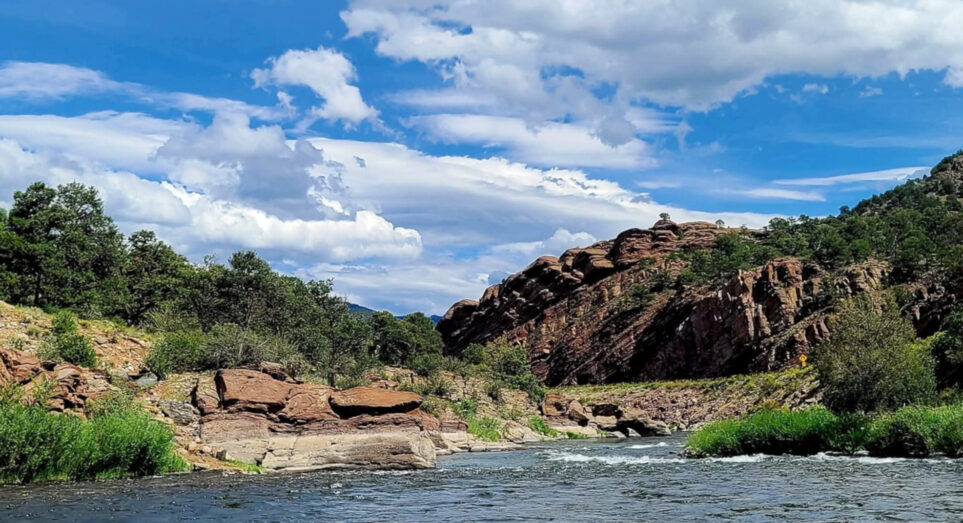
Every spring, we watch the snowpack reports roll in from the Sawatch and Mosquito ranges with hopeful eyes. Some years the high country delivers — big snowfall, strong runoff, and the Arkansas running bold through Browns Canyon. And some years? Well, some years the river tells a different story.
But here’s what years of guiding on this stretch has taught us: low water on the Arkansas isn’t a consolation prize. It’s a different river, and a genuinely great one.
The Arkansas Changes, and So Do You
The Arkansas between Buena Vista and Salida is not a big, rolling western river. It’s a dynamic, technical mountain stream — tight channels, quick drops, and a current that rewards attention. At peak runoff in May and June, flows can push above 2,000 CFS, and the rapids like Zoom Flume, Big Drop, and Seidel’s Suckhole are loud and powerful. It’s exhilarating.
But as summer settles in and the snowmelt tapers off, the river drops into a more moderate range — and something interesting happens. The Arkansas doesn’t become a lesser version of itself. It becomes a more intimate one.
Boulders that were fully submerged emerge from the current. The famous granite walls of Browns Canyon — Precambrian rock over a billion years old — feel closer and more textured. The water clears. The pools between rapids stretch out wide and calm. You start noticing the bighorn sheep on the canyon rim, the bald eagles circling over the river, the way the spire-like granite formations catch the afternoon light.
The river slows down. And honestly? So do you.
Swimming: Not an Afterthought Anymore
At high flows, swimming is a quick thrill — a splash off the raft, a brief float in the current, then back in the boat. At low water, swimming becomes the activity.
Those calm pools between rapids that you’d normally drift through in a minute? At lower flows they open up into clear, inviting stretches you can actually swim across. The Arkansas runs cold all season — it’s snowmelt fed — but by late July and August the shallower water warms up in the Colorado sun to something genuinely comfortable, especially in the afternoon.
The granite bottom is visible. The water is clear. Kids who felt a little wide-eyed at high water find their confidence and don’t want to get back in the raft. First-timers who came for the rapids end up telling you the swim was the highlight of the day.
Pack water shoes you’re comfortable swimming in, and don’t be surprised if your guide calls a stop at a good pool and just… lets everyone enjoy it for a while. That’s part of the plan.
Exploring the Canyon That’s Always Been There
Browns Canyon National Monument covers over 21,500 acres of granite canyon, ponderosa pine forest, and high desert shrubland between Buena Vista and Salida — but at high water, a lot of it blurs past from the raft. Low water invites you to actually look around.
Pull over on a granite shelf and you’re standing on rock that’s been shaped by over a billion years of geology and millions of years of river flow. The canyon walls rise around you into those cathedral-like spires that the monument is famous for. Side drainages come down from the backcountry. The riparian corridor along the bank is dense with willow and alder, alive with birds working the water’s edge.
This is the season when wildlife sightings feel more like encounters than glimpses. Bighorn sheep, mule deer, river otters, golden eagles, bald eagles, osprey, and the occasional black bear are all regulars in the canyon. At lower flows and slower pace, you’re in the habitat longer and paying closer attention — which is exactly when you see things.
The Honest Part
Yes, some rapids become more technical at low water — more rock-reading, more precise maneuvering, the occasional scrape or drag through a shallow riffle. The Arkansas is a narrow river with a rocky bottom, and that bony character is more present when flows drop.
But our guides know this river in all its moods. Low water on a river you know well isn’t a hazard — it’s a different kind of puzzle, and working through it is part of the fun. You’ll do more steering, make more deliberate moves, and come off the water feeling like you actually drove something rather than just held on.
How We Run Trips on Low-Water Years
We don’t just run the same trip at lower volume. We adapt. We build in more stops at the pools that earn them. We slow down in the canyon and let people actually be in it. We treat the swimming holes as destinations, not distractions.
We also talk honestly with guests from the start. Low water on the Arkansas is a real river experience — technical, beautiful, and fun in ways that high water simply isn’t. It’s the version of the river that rewards curiosity over adrenaline, though there’s still plenty of the latter.
Depending on where flows are sitting, we may also adjust which section of the river we run and how long the trip is. Some stretches handle lower water better than others, and part of our job is putting you on the best water available on any given day. We’ll always be upfront about what we’re planning and why.
More often than not, people come off the water at Stone Bridge saying it was their favorite kind of trip — not in spite of the conditions, but because of them.
The Arkansas gives you something every season. Some years it gives you big waves and fast water and the kind of rapids that make you yell. Other years it gives you clear pools, warm granite, canyon walls up close, and an afternoon that stretches out golden and unhurried.
We’ll take both.
Curious what the river is running this season? Get in touch and we’ll give you the honest picture — and why we’re looking forward to it.